
What Is a Multi-Level Deck, and Is It Right for Your Michigan Yard?
A multi-level deck has two or more connected platforms instead of one flat surface. It’s a practical fit for Michigan homeowners with sloped yards, walkout basements, or a need for separate outdoor living zones, without extensive grading or one long staircase.
If you’re researching multi-level decks Michigan homeowners trust, this guide from Union Properties walks through how multi-level decks work in Southeast Michigan, what to plan for before you build, and what affects your cost and timeline.
Why Multi-Level Decks Work Well in Southeast Michigan
Homes across Port Huron, St. Clair, Lexington, Marysville, Lapeer, Davison, and Sterling Heights often deal with real backyard challenges: slopes, walkout basements, lakeshore winds, and freeze-thaw movement. A multi-level design helps with each one.
- Reduces the need for major grading on sloped lots
- Improves water runoff management during spring melt and heavy rain
- Creates safer transitions when an entry door sits high off the ground
- Keeps outdoor living usable and comfortable across the seasons
Is a Multi-Level Deck the Right Fit for Your Home?
A multi-level deck isn’t always necessary, but it’s worth considering if:
- Your backyard slopes away from the house
- You want distinct zones for grilling, dining, lounging, a hot tub, or kids and pets
- Your existing deck feels cramped or awkward to move through
- You want a more finished, custom look from both the yard and inside the home
If your yard is flat and you don’t need separate zones, a single-level build may be all you need. See our guide to single-level deck building in Michigan to compare.
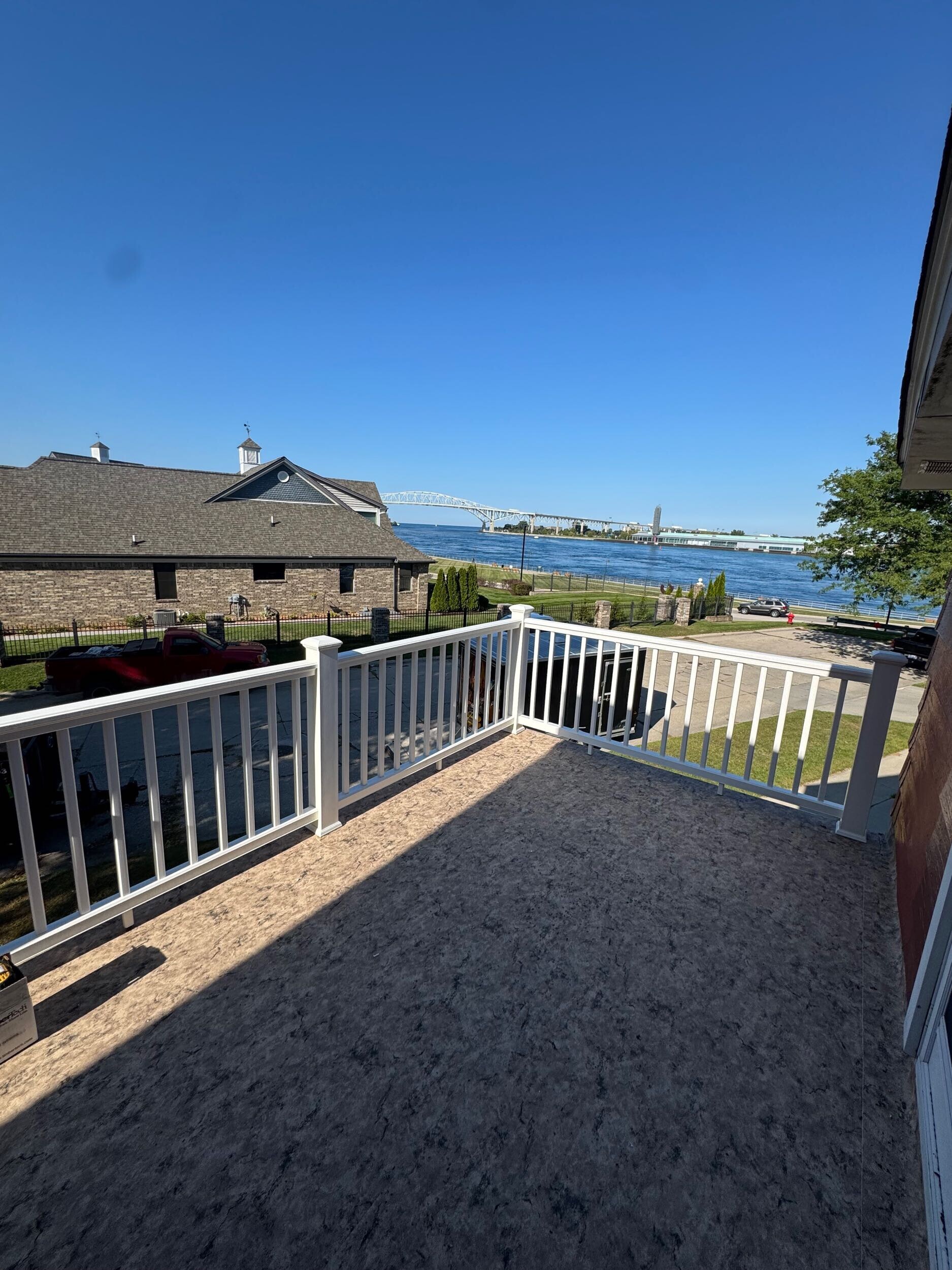
Common Multi-Level Deck Configurations to Plan Around
Before you meet with a builder, it helps to know the general shape you’re after. These are the configurations Union Properties sees most often across Southeast Michigan yards:
Two-Level Dining and Lounge
The upper level sits right off the back door for grilling and dining. The lower level becomes a quieter lounge space, often anchored by furniture or a fire feature. This is the most common starting point for homeowners who want two distinct zones without a large footprint.
Walkout Basement Deck and Patio
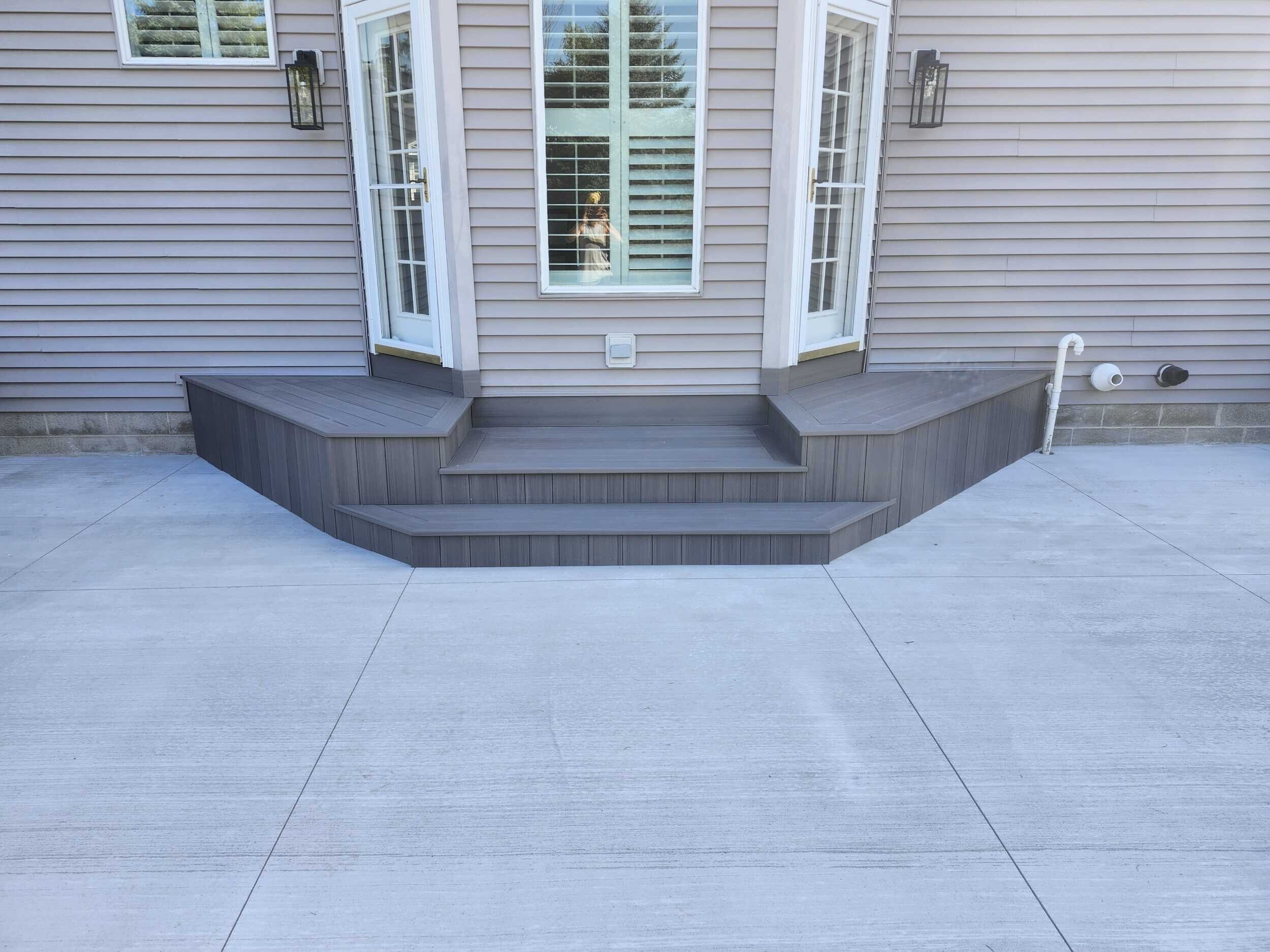
A deck at the main-floor level connects to a lower landing that transitions into a patio or yard path. This configuration works especially well for homes with a lower-level entrance, since it turns an awkward grade change into a planned transition instead of a single long staircase.
Pool or Hot Tub Tier
A dedicated lower level handles hot tub or pool access separately from the main entertaining space. Keeping wet zones on their own level helps with traffic flow and keeps the rest of the deck dry and usable.
Wraparound and Split Levels
Best suited to corner lots or larger footprints, this configuration wraps the deck around the home instead of building one large platform. It creates a sense of flow between outdoor areas rather than one big open space.
None of these are one-size-fits-all. Your yard’s slope, your entry points, and how you actually plan to use the space should drive the final layout, not the other way around.
Stairs, Railings, and Sight Lines
A few details make the difference between a multi-level deck that feels natural and one that feels choppy. Stairs should avoid cutting through dining or lounge areas, and entry points should stay wide enough for easy movement between levels. Level heights should step down in comfortable, consistent increments rather than one tall drop.
Railings matter for more than safety. On waterfront or scenic lots, a cleaner railing profile helps preserve the view instead of boxing the deck in. And because multi-level layouts naturally create separated corners, they can build in privacy where you want it without relying on bulky screens.
How to Plan a Multi-Level Deck: What to Expect
A multi-level build has more moving parts than a single-platform deck. Here’s the general planning sequence Union Properties walks homeowners through:
- Assess the yard. Slope, drainage, and where the deck connects to the house shape the whole layout.
- Define zones and stair placement. Decide how you’ll actually use each level and how people will move between them.
- Choose materials. Wood and composite decking perform differently across multiple levels and stairs (see comparison below).
- Plan the structure. Footings, ledger attachment, and stair framing all need to account for Michigan conditions.
- Handle permits and inspections. Most attached or elevated decks require a permit before work begins.
- Set a realistic budget and timeline. Size, materials, and features all affect both.
Wood vs. Composite Decking for Multi-Level Builds
Michigan decks deal with snow load, spring moisture, and freeze-thaw movement, so material choice matters even more on a multi-level build with several platforms, stairs, and transitions. Union Properties installs both wood and composite decking, depending on your goals, budget, and how much maintenance you want long-term.
| Wood Decking | Composite Decking | |
|---|---|---|
| Upfront Cost | Typically more budget‑friendly upfront | Higher upfront investment |
| Maintenance | Regular cleaning, staining, and sealing, especially on stairs and rail caps | Low maintenance; no staining required, though routine cleaning still helps |
| Look Across Levels | Natural warmth; flexible for classic or modern styles | Consistent color and appearance across multiple platforms |
| Best For | Homeowners who like real wood and don’t mind periodic upkeep | Homeowners who want a long‑term, low‑upkeep finish |
Union Properties prefers TimberTech composite decking for homeowners who want a durable, low-maintenance finish, particularly on stair treads and other high-traffic areas.
Planning Add-Ons Worth Budgeting For
A few features come up often enough on multi-level builds that it’s worth planning and budgeting for them from the start, rather than adding them as an afterthought.
- Lighting: Stair lights improve safety on every level change, rail lights add visibility at night, and soft perimeter lighting gives the whole deck a finished look. This is one of the most requested upgrades on multi-level builds.
- Under-deck drainage: If you want to use the space below an upper level, whether for storage, a dry patio, or a lower-level entry, drainage needs to be designed in from the start. This matters more in Michigan given spring melt and heavy rain.
- Skirting: Proper skirting finishes the look of a multi-level deck, can help deter critters from nesting underneath, and should still allow airflow and access for maintenance.
- Built-in benches: A practical way to add seating and clean up an edge, particularly on smaller levels where furniture would eat up usable space.
These additions affect both cost and timeline, so it’s worth deciding early which ones matter to you instead of adding them mid-build.
What Does a Multi-Level Deck Cost in Michigan?
Every deck is different, but most homeowners want a realistic range to plan around. Professionally built decks in the region often fall around $30 to $60 per square foot installed, depending on size, materials, and complexity. Because multi-level decks require more framing, more stairs, and more finish work, they typically land on the higher end of that range.
| Material | Typical Planning Range (per sq ft, installed) |
|---|---|
| Wood multi-level deck | Often around $35–$65+ |
| Composite multi-level deck | Often around $50–$90+ |
These figures are general planning information, not a quote.
What Impacts Price the Most
Your final number usually depends on:
- Overall square footage and number of levels
- Stair count and complexity, since more levels mean more transitions
- Material choice (wood vs. composite)
- Railing type, standard vs. upgraded
- Built-in features like benches, lighting, or privacy walls
- Demolition or removal of an existing deck
- Backyard access, since tight spaces can increase labor time
Union Properties Pro Tip: When comparing estimates, make sure each quote covers the same scope. Two decks can look similar on paper but be built very differently underneath.
How Long Does a Multi-Level Deck Take to Build?
Multi-level decks generally take longer than a single-level build because there’s more framing, stairwork, and finishing detail. The exact timeline depends on size, number of levels, and features.
| Project Size | General Timeline |
|---|---|
| Smaller 2-level deck with standard stairs and railings | About 2–3 weeks |
| Medium multi-level deck with multiple stair runs and upgraded details | About 3–5 weeks |
| Larger or custom build (three levels, lighting, built-ins) | About 5–6+ weeks |
Permits, inspections, material lead times, and Michigan weather can all affect the schedule. A trusted, experienced deck builder sets expectations early and keeps you updated throughout the process.
Structural and Permit Considerations in Michigan
A multi-level deck is more complex than a single platform, so the structure has to be right.
Structural Must-Haves
- Footings and frost depth: Footings need to be planned for freeze-thaw conditions so the deck stays stable long-term.
- Ledger attachment: Proper attachment to the home matters for safety and longevity.
- Load and stair engineering: More levels mean more transitions, stair framing, and weight distribution points to account for.
Permits and Inspections
Most decks that are elevated, attached to the home, above a certain size, or built with stairs and railings require a permit in Michigan. Requirements vary by city and county, so it’s worth confirming with your local building department before work begins.
For general reference on how Michigan’s residential code applies to construction projects, see the Michigan Bureau of Construction Codes. A good contractor will confirm local requirements and build to code so inspections go smoothly.
Choosing the Right Multi-Level Deck Builder
Here’s what to look for, especially on a multi-level design:
- Clear planning and communication from the start
- A detailed scope of work, not vague line items
- Clean jobsite habits so you can still live at home comfortably
- Realistic expectations on timeline and what’s included
- Local experience with Michigan weather and code requirements
Multi-level decks aren’t the place to gamble on shortcuts. Learn more about our team and approach and how Union Properties plans every project.
FAQs: Multi-Level Decks in Michigan
Do multi-level decks require more maintenance?
Not necessarily. Material matters most. Wood decks need more ongoing upkeep, and multi-level builds simply have more stairs and surface area to maintain. Composite decks usually require less.
Are multi-level decks safe for kids and dogs?
Yes, when they’re designed with proper stair widths, railing height, and lighting. Good layout planning is the key.
Can a multi-level deck work in a small backyard?
Absolutely. A split layout can make the space feel larger and more usable than one big platform.
What’s better: a multi-level deck or a deck and patio combo?
It depends on your yard and how you want to use the space. A deck and patio combo can work well for sloped lots or walkout basements.
Can you rebuild a multi-level deck using the existing frame?
Sometimes. Often the best long-term value comes from rebuilding properly if the structure is aging or wasn’t built to current standards.
Ready to Plan Your Multi-Level Deck?
A multi-level deck should feel like it belongs there: easy to move through, comfortable to use, and built to handle Michigan weather without constant upkeep headaches. If you’re planning a new build or replacing an older deck in Port Huron or nearby, Union Properties can help you design and build one of the multi-level decks Michigan homeowners rely on to fit their space and their life.
Ready to build a deck that fits your lifestyle? Tell us about your project to get started.