
Deck resurfacing vs replacement comes down to one key question: Is your deck’s structure still sound?
At Union Properties, we know Michigan’s weather is tough on outdoor spaces. Understanding when you can resurface versus when you need a full rebuild can save time, money, and long-term headaches.
What’s the Difference Between Deck Resurfacing and Replacement?
Deck resurfacing updates the surface of your existing deck while keeping the original framing in place. This usually means removing old boards and installing new wood or composite decking on top of a structurally sound frame.
Deck replacement, on the other hand, involves tearing out the entire deck and rebuilding it from the ground up, including posts, beams, joists, and footings.
In general:
- Resurfacing is used when the deck structure is solid but the surface is worn.
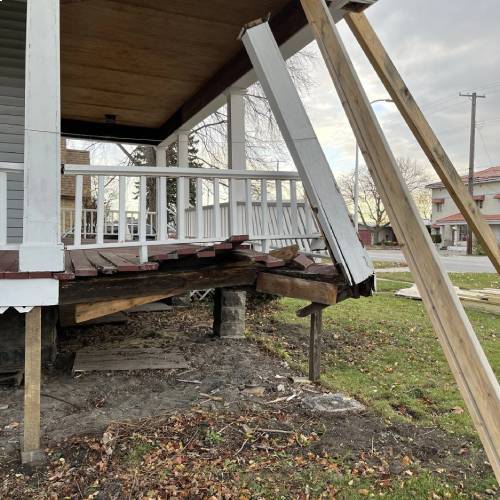
- Replacement is necessary when the framing or foundation is compromised or outdated.
How Michigan Weather Impacts Your Deck’s Lifespan
Port Huron decks face challenges that homeowners in milder climates don’t:
- Freeze-thaw cycles that cause boards to expand, contract, and crack
- Moisture exposure from rain, snow, and lakeshore humidity
- UV exposure that fades and dries out wood over time
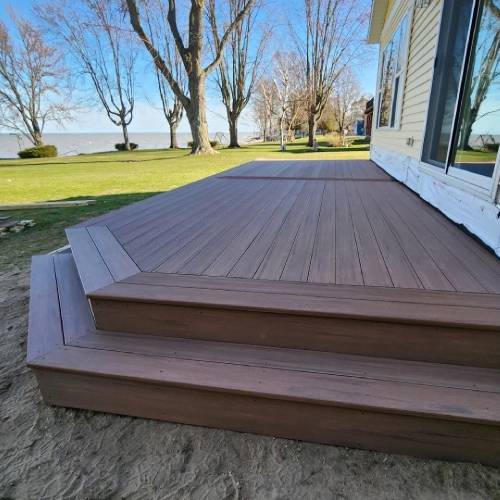
These conditions accelerate wear, especially on traditional wood decking. That’s why many homeowners choose composite decking like TimberTech, which resists moisture damage, won’t splinter, and holds up better year after year in Michigan’s climate.
Signs Your Deck Is a Good Candidate for Resurfacing
Not every aging deck needs to be replaced. Resurfacing can be a smart option if:
- The framing, posts, and joists are solid
- There’s no rot or structural damage
- Wear is limited to the surface, such as:
- Splintering boards
- Fading or discoloration
- Cupping or minor warping
- You want a fresh look without a full rebuild
- You’d like to upgrade from wood to composite decking
Benefits of Resurfacing
- Lower overall cost than replacement
- Faster project timeline
- Less material waste, making it more eco-friendly
- Opportunity to switch to low-maintenance composite decking
When Replacement Is the Better Choice
In some cases, resurfacing simply isn’t enough. Full replacement is usually the right move when you’re dealing with:
- Rotting or failing framing
- Loose or improperly attached ledger boards
- Footings or posts that no longer meet Michigan building code
- Structural safety concerns
- Plans to expand the deck or completely redesign the layout
Benefits of Full Replacement
- Brand-new framing and footings
- A fully updated design that fits how you use your outdoor space
- Longest possible lifespan
- The most reliable option for older Michigan homes
Composite vs. Wood When Resurfacing a Deck
When comparing wood vs. composite decking for resurfacing, the difference largely comes down to maintenance, longevity, and upfront investment.
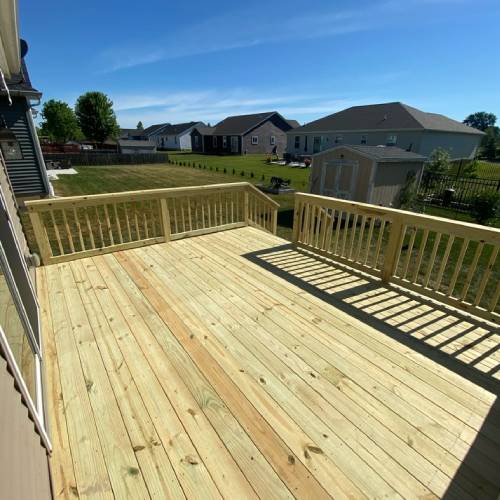
- Wood decking offers a traditional look and a lower initial cost, but requires regular staining or sealing and is more affected by Michigan’s moisture and freeze-thaw cycles.
- Composite decking costs more upfront but delivers long-term durability with minimal maintenance and better resistance to weather-related wear.
Both materials can perform well when installed on a structurally sound frame. The right choice depends on how much ongoing maintenance you’re comfortable with and how long you plan to stay in the home.
Cost Differences: Resurfacing vs. Replacement in Michigan
While exact pricing varies by project, there are some general cost factors to consider:
- Materials: Composite boards cost more than wood, but last longer
- Labor: Resurfacing requires less labor than rebuilding an entire deck
- Maintenance: Composite has lower long-term upkeep costs
- Financing options: Can help spread out the investment for either option
A professional evaluation is the best way to understand which option makes sense for your deck and your budget.
FAQs About Deck Resurfacing and Replacement
How long does deck resurfacing take?
Most resurfacing projects are completed faster than full replacements, often in just a few days once materials are ready.
Can every deck be resurfaced?
No. The underlying structure must be in good condition to qualify for resurfacing.
Should I switch to composite decking?
Many Michigan homeowners do, especially for improved durability and reduced maintenance.
Does resurfacing require permits in Michigan?
Permit requirements vary by municipality. Union Properties can confirm what’s needed and handle the permit process, if necessary.
How long will a resurfaced deck last?
With quality materials and proper installation, a resurfaced deck can last many years, especially with composite boards.
Considering Updating Your Deck? Union Properties Can Help
As a trusted local contractor, Union Properties understands what Michigan decks need to last. Our team evaluates your existing structure honestly, recommends the right solution, and installs high-quality materials with clean workmanship and clear communication.
Serving homeowners in Southeast Michigan, we help you make confident decisions about your outdoor space. From resurfacing to full deck replacement, we’ll guide you toward the option that fits your home and climate. Contact us today to get started!