
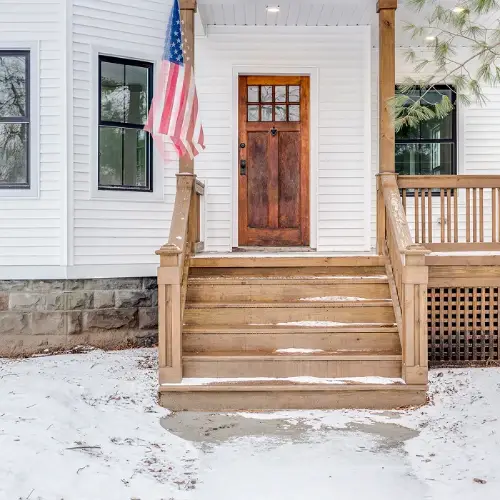
Is Composite or Wood Decking Better for Michigan Homes?
Composite decking is typically better for Michigan’s moisture and freeze-thaw cycles due to lower maintenance and longer lifespan, while wood decking offers a lower upfront cost and natural look but requires more upkeep.
Trying to decide between composite vs wood decking in Michigan? The best choice depends on your budget, how much maintenance you want to do, and the look you’re after. This guide from Union Properties compares both materials in real Michigan weather so you can choose confidently.
First, a quick overview.
What’s the Difference Between Composite and Wood Decking?
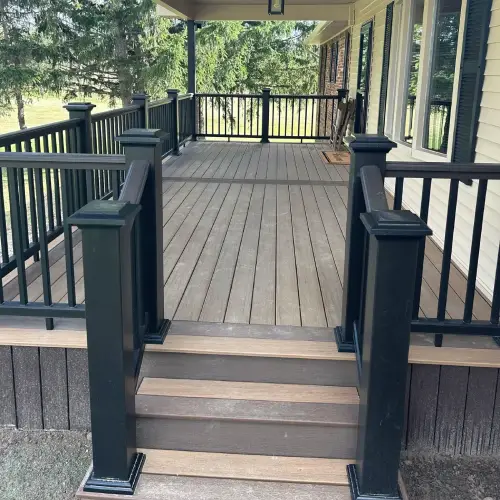
Composite decking is low-maintenance and weather-resistant, while wood decking offers a classic natural look with more upkeep. Both can work well in Michigan, depending on your budget, style, and maintenance preferences.
At a basic level:
- Composite decking is made from a blend of wood fibers and plastics (often called wood-plastic composites) formed into boards that resist moisture, fading, and rot.
- Wood decking is built from natural lumber, such as pressure-treated wood, softwood, or hardwood, offering warmth and character, along with regular staining and sealing.
For many Port Huron homeowners, the decision comes down to whether they’d rather invest more upfront for less maintenance (composite) or save initially and take on more upkeep over time (wood).
How Michigan Weather Impacts Your Deck Material Choice
Michigan’s seasons don’t go easy on decks. Between lake-effect winds off Lake Huron, heavy snow, spring thaw, and humid summers, your deck material has a lot to handle.
Key weather factors to consider:
- Freeze–thaw cycles: Repeated freezing and thawing can cause traditional wood decking to expand, contract, crack, and warp over time if it’s not properly maintained.
- Moisture and lakeshore conditions: Homes near the water or in shaded areas hold more moisture around the deck. That can accelerate rot, mold, and mildew on wood, especially if boards or fasteners weren’t installed correctly.
- UV exposure and sun fading: Strong sun breaks down finishes on wood faster than many people expect. Composite decking is engineered to hold color longer and resist surface breakdown.
- Why composite (like TimberTech) performs well here: Quality composite options, including TimberTech decking, are designed to resist moisture absorption and surface breakdown, making them a smart fit for Michigan’s mix of snow, rain, and summer sun.
Pros and Cons of Composite Decking
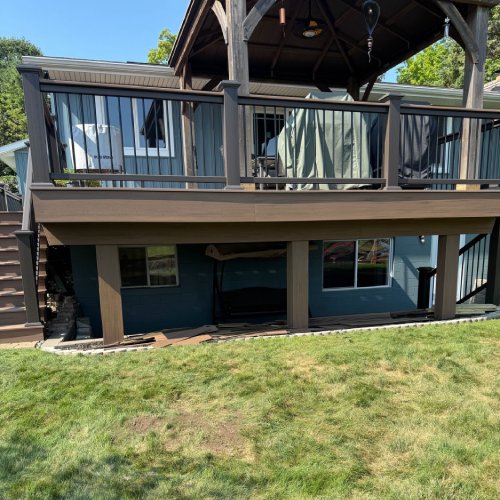
Composite decking has become popular for homeowners who want a deck that looks good without constant upkeep.
Pros of Composite Decking
- Low maintenance: No annual staining or painting. A simple wash with soap and water is usually enough.
- Long lifespan: Many composite products are designed to last 25–30 years or more when installed correctly.
- Fade and stain resistance: Composite boards are engineered to resist fading, stains, and surface splintering.
- Consistent appearance: Boards are uniform in color and texture, which creates a clean, modern look and helps hide replacement boards.
- Built for tough weather: Composite decks perform well in high-moisture and high-traffic areas, making them ideal for busy Michigan households.
Cons of Composite Decking
- Higher upfront cost: Material costs are generally higher than those of pressure-treated wood, even though lifetime maintenance tends to be lower.
- Heat retention: Composite can get warm in direct sun. Choosing lighter colors and thoughtful design (like shade or placement) helps.
- Less “natural” feel: Today’s composites mimic wood grain well, but some homeowners still prefer the feel and variation of real lumber.
Want a closer look at how composite performs in Port Huron yards? Explore composite decking options with Union Properties.
Pros and Cons of Wood Decking
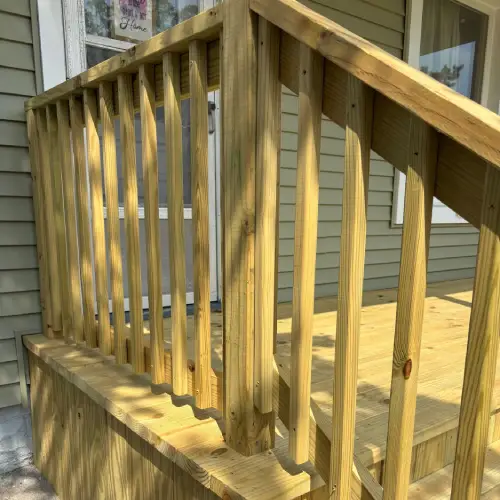
Wood decking remains a classic choice for homeowners who love natural grain, custom stains, and a familiar feel underfoot.
Pros of Wood Decking
- Natural aesthetic: Real wood offers warmth, character, and subtle variation that’s hard to fully replicate.
- Lower initial cost: Pressure-treated wood often comes with a lower upfront price tag than composite.
- Customizable over time: You can sand, stain, or paint wood decking as styles change, or refresh the look with a new finish.
- Easier board-by-board repair: Individual boards can be swapped out more easily as they age or get damaged.
Cons of Wood Decking
- More maintenance: Plan on routine staining, sealing, or painting to protect against moisture and UV damage.
- Shorter lifespan in Michigan: With freeze–thaw cycles and moisture exposure, wood decks typically need more frequent repairs or replacement over their lifetime.
- Higher risk of rot and splinters: Even with good maintenance, boards can still crack, warp, or develop soft spots over time.
If you’re leaning toward a natural look, explore wood deck options with Union Properties.
When Wood Is the Better Choice (And When It’s Not)
Wood isn’t “old-fashioned” — it’s just better suited to certain projects and preferences.
Wood may be the better choice when:
- You’re working with a tighter upfront budget.
- You’re planning a smaller deck or platform that won’t see heavy use.
- You like the idea of changing stain colors or refreshing the look every few years.
- You’re comfortable with annual maintenance days built into your calendar.
Wood may not be ideal when:
- Your deck sits in a shady, damp, or lakeshore area where moisture lingers.
- You don’t want to worry about splinters, peeling stain, or frequent sealing.
- You’re building a large deck that will be expensive and time-consuming to maintain.
- You know you’ll be too busy to stay on top of upkeep.
When Composite Is the Better Choice
Composite shines when homeowners want long-term ease and consistent performance.
Composite decking is often the best fit when:
- You have a busy household
- You’re planning to stay in your home long-term
- Your home is in a high-moisture or lakeshore area
- You want a clean, modern look
- You’d rather spend time using your deck than maintaining it
Can You Resurface a Wood Deck With Composite?
In many cases, yes — you can resurface an existing wood deck with composite boards, but it depends on the condition of the structure.
Resurfacing with composite may be possible when:
- The framing and footings are still in good shape
- There’s no significant rot or structural damage
- The deck layout already works well for how you use the space
Benefits of resurfacing:
- Fresh, low-maintenance surface without rebuilding the entire deck
- Updated color and style to match your home’s current exterior
- Less disruption than a full tear-down and rebuild
There are also times when a full rebuild is safer and smarter, especially if the structure is older, has been pieced together over time, or shows signs of movement or sagging. Union Properties can inspect your existing deck, explain what we see, and help you decide whether resurfacing or rebuilding makes the most sense. Learn more about our local, experienced team here.
Wondering if your deck frame is a good candidate for composite resurfacing?
Deck Design Options to Consider
Whether you choose composite or wood, your deck material is just one piece of the overall design.
Here are a few features Union Properties often helps homeowners think through:
Multi-level layouts
Great for sloped yards or separating grilling, dining, and lounge areas.
Custom handrails and deck railing systems
From classic wood deck railing to modern composite deck railing, plus options like wire, glass, or galvanized pipe to create more open views and lighter sightlines.
Concrete flatwork and transitions
Patios, walkways, and steps that connect your deck to the rest of the yard can make the space feel more cohesive and safer to navigate.
Lighting and accessories
Stair lights, post caps, and under-rail lighting add both safety and ambiance for evening use.
See how Union Properties designs and installs deck railings and handrails.
Cost Comparison: Composite vs. Wood Decking in Michigan
Exact pricing will depend on size, layout, materials, and site conditions, but there are some general patterns.
Upfront Costs
- Wood decking
- Often, the lower-cost option for materials.
- Pressure-treated wood is typically the most budget-friendly.
- Composite decking
- Higher upfront material cost.
- Hardware and framing requirements can differ slightly, which may affect labor.
Lifetime Costs
When you factor in staining, sealing, cleaning products, and repairs, composite can narrow the gap or even come out ahead over time:
- Wood usually needs regular maintenance (every 1–3 years) to stay protected.
- Composite’s ongoing costs are mostly routine cleaning and occasional touch-ups.
Financing Availability
If you’d prefer to spread out the investment, Union Properties offers flexible financing options through Service Finance Company for deck projects, siding, windows, and other home improvements. That can make it easier to choose the material that fits your long-term plans, not just your short-term budget.
FAQs About Choosing Deck Materials in Michigan
How long does composite decking last in Michigan?
Most composite decks are designed to last 25–30 years or more when installed correctly and cleaned as recommended. The framing beneath still needs to be built to code, but the surface itself holds up very well to moisture and temperature swings.
Does composite decking get hotter than wood?
Composite can feel warmer underfoot in direct sun, especially in darker colors. Choosing lighter shades, adding shade structures, and thoughtful placement (like avoiding full-day, unshaded exposure when possible) all help manage surface temperature.
Can you mix materials, like composite decking with wood railings?
Yes. Many homeowners choose composite decking with wood or metal railings to balance budget, aesthetics, and maintenance. Union Properties can walk you through combinations that look cohesive and perform well in Michigan weather.
Which deck material is easier to clean?
Composite decking is generally easier to clean. Most messes come up with mild soap, water, and a soft brush. Wood may need more careful cleaning to avoid stripping the finish or raising the grain, especially before restaining.
Are composite decks slippery in winter?
Both composite and wood decks can be slippery when wet, icy, or snow-covered. Good design (proper pitch and drainage), safe snow-removal practices, and thoughtful board texture help improve traction. We can recommend products designed with grip in mind.
Do I need permits to build a deck in Port Huron?
In most cases, yes — especially for elevated decks or those attached to your home. Union Properties handles permits and inspections as part of our process so your deck meets local requirements and passes inspection the first time.
Start Your Deck Project With Union Properties
Choosing between composite vs wood decking in Michigan doesn’t have to feel overwhelming. You don’t need to memorize product lines or become an expert in moisture management — that’s what Union Properties is here for.
When you reach out, we’ll:
- Listen to how you want to use your space.
- Look closely at your yard, home, and existing structure (if you have one).
- Talk through material options, design ideas, and realistic budgets.
- Help you weigh the trade-offs between composite and wood so the choice feels clear.
Ready to explore what’s possible for your backyard?
Contact Union Properties to schedule a conversation about your next deck project.